




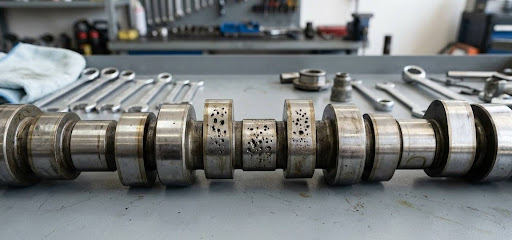
Camshaft pitting in X15 and ISX15 engines is primarily caused by poor lubrication, contamination, and metal fatigue. In Edmonton’s climate, extreme cold, condensation, and heavy idling accelerate that damage.
Why Edmonton’s Climate Is Brutal On Diesel Camshafts
If you run trucks in Edmonton, you already know the cold is uncomfortable, and it’s also hard on your equipment.
Engines regularly cycle from -40°C to full operating temperature. That constant thermal cycling creates condensation inside the crankcase, which leads to moisture-contaminated oil and increased internal wear. On top of that, extended idle time through long winters reduces oil pressure to critical components like cam lobes.
Put together, thermal cycling, condensation buildup, and prolonged idling create the exact conditions that accelerate diesel camshaft wear.
That’s why X15 camshaft pitting, ISX15 camshaft pitting, and broader Cummins camshaft pitting issues are far more common in Edmonton than in milder climates.
Thermal Cycling & Condensation Buildup
When an engine heats up from deep cold, condensation forms inside the crankcase. That moisture mixes with combustion byproducts and creates acidic conditions in the oil.
Over time, that acidic oil attacks metal surfaces, particularly cam lobes. These surfaces rely on a consistent oil film to prevent metal-on-metal contact. Once that film breaks down, microscopic damage begins.
That’s one of the core camshaft pitting causes – it often starts invisibly and builds with every cold cycle.
Extended Idle Time In Winter
From November through March, fleets across Edmonton rely heavily on idle time to keep engines warm. It makes sense operationally, but it comes with a trade-off: At low RPM, oil pressure drops. Camshaft lobes, which sit high in the engine, don’t always receive optimal lubrication during extended idle periods. That lack of lubrication leads to friction, heat, and eventually camshaft lobe wear. Over time, that wear turns into pitting, and in severe cases, full camshaft failure.
What Is Camshaft Pitting And How Does It Start?
Camshaft pitting is the formation of small surface defects or “pits” on the cam lobes. These pits develop when the protective oil film breaks down, and metal surfaces begin to fatigue under repeated stress. This type of wear is commonly referred to as Cummins camshaft pitting in heavy-duty diesel applications.
As the pits grow, they disrupt the smooth contact between the camshaft and follower. This leads to uneven wear, reduced valve timing precision, and eventual performance loss.
If left unchecked, it can escalate into a Cummins camshaft failure, one of the more expensive issues tied to Cummins X15 problems and ISX15 camshaft problems.
Understanding camshaft pitting causes is key to avoiding major damage. Pitting often starts at a microscopic level due to contamination, moisture from condensation, and inadequate lubrication during cold starts. These conditions explain what causes camshaft pitting, particularly in colder climates like Edmonton, where engines face repeated thermal stress.
Once the hardened surface of the cam lobe is compromised, wear accelerates quickly and becomes difficult to stop without replacement. That’s why camshaft pitting prevention focuses heavily on oil quality, maintenance intervals, and minimizing cold-start wear.
Do you understand how a camshaft works? It controls the opening and closing of engine valves in sync with the crankshaft. When the cam lobes degrade, that timing becomes inconsistent, which affects combustion and engine performance.
Early Warning Signs Of Cam Lobe Degradation
Catching pitting early can save you from a full rebuild. Watch for:
- Visible scoring or pitting during inspection
- Rough idle or inconsistent engine performance
- Misfires or reduced power under load
- Ticking or abnormal valvetrain noise
- Increased metal particles in oil analysis
These symptoms often appear gradually. Ignoring them can lead to catastrophic failure.
X15 Vs. ISX15: Pitting Risk Across Both Platforms
Both the Cummins X15 and ISX15 are widely used across Canada, and both are susceptible to camshaft issues.
The ISX15 typically uses a single overhead cam (SOHC) configuration, while newer X15 platforms may include design improvements that affect wear distribution and load handling across components.
However, the underlying risk remains similar. Poor lubrication, contamination, and heavy-duty use create conditions for pitting in both engines. In cold climates like Edmonton, those risks are amplified by frequent cold starts, condensation buildup, and extended idle periods.
The difference is often in how the wear presents itself. Some engines show early lobe wear, while others develop deeper pitting over time, depending on operating conditions and maintenance practices. Variations in oil flow, component tolerances, and duty cycles can also influence how quickly damage progresses.
Understanding your specific platform, along with how it’s used day-to-day, helps you stay ahead of potential failures and plan Edmonton diesel maintenance more effectively.
5 Proven Strategies To Prevent Camshaft Pitting
Preventing camshaft pitting comes down to consistent maintenance and smart operating practices:
1. Spec The Right Oil: CK-4 With Anti-Wear Additives
Not all oils are built for heavy-duty diesel conditions. CK-4 oils with proper zinc and phosphorus (ZDDP) additives help protect cam surfaces under high pressure.
Generic or low-quality oils break down faster in cold climates, increasing the risk of wear. In Edmonton, where engines face repeated cold starts and condensation buildup, oil quality becomes even more critical. The wrong oil won’t maintain a stable protective film on cam lobes, particularly during startup when most wear occurs.
2. Minimize Cold Idle Time – Use Block Heaters
Block heaters are standard across Edmonton fleets, but idle reduction is still underutilized.
Reducing unnecessary idle time helps maintain better oil pressure and reduces prolonged exposure to low-lubrication conditions. Idling for extended periods keeps oil temperatures low, which limits its ability to flow properly through the valvetrain. Using block heaters to warm the engine before startup allows oil to circulate more effectively and reduces stress on camshaft components.
3. Don’t Stretch Oil Change Intervals In Cold Climates
Cold-weather operation leads to fuel dilution and moisture buildup in oil. That reduces its protective properties.
Stick to manufacturer-recommended intervals for your Cummins X15 camshaft and related components. Extending intervals might save money in the short-term, but it increases long-term risk. Shorter intervals help remove contaminants before they can cause damage, particularly in stop-and-go or idle-heavy operations.
4. Inspect Cam Lobes During Every Inframe Overhaul
An in-frame overhaul is the perfect time to inspect cam lobes closely.
If early pitting is detected, replacing the camshaft before failure prevents larger damage to the engine. Small surface defects can quickly escalate into full lobe failure, which can impact injectors, rockers, and other valvetrain components if left unaddressed.
Need a reliable diesel camshaft for your next overhaul? Behind The 8 supplies high-quality aftermarket components built for heavy-duty applications.
5. Run Oil Analysis Every 15,000 km
Oil analysis gives you a window into what’s happening inside your engine.
Elevated iron or copper levels can indicate early wear in camshafts and related components. Catching this early allows for proactive maintenance instead of reactive repairs.
Regular analysis also helps identify contamination issues, giving you a clearer picture of overall engine health before visible damage occurs.
When Prevention Isn’t Enough: Replacement Options
Even with the best maintenance practices, wear happens. Many operators ask why camshafts break. The answer usually comes down to lubrication failure, contamination, and long-term fatigue. Preventing these factors is key to extending engine life.
At some point, replacement becomes the smarter option. The key is choosing the right part for the job.
Understanding camshaft replacement cost helps you compare options. Pricing varies based on engine type, labour, and part quality. Investing in a high-quality aftermarket camshaft can reduce long-term costs by improving durability.
Looking for an SOHC Cummins ISX15 camshaft that delivers performance without OEM pricing? Behind The 8 offers dependable aftermarket solutions designed for today’s heavy-duty engines.
It’s also worth considering related components during replacement. Parts like the ISX15 cylinder head and valvetrain components should be evaluated to ensure overall system reliability. Need an ISX15 cylinder head or supporting components? Behind The 8 supplies precision-built aftermarket parts with fast shipping across Alberta and BC.
Keep Your Fleet Moving Through Edmonton Winters
Edmonton winters aren’t going anywhere, but camshaft failures don’t have to be part of the job.
Staying ahead of cold-weather camshaft damage means understanding how your engine operates, maintaining it properly, and using parts you can rely on.
Behind The 8 was built by people who’ve worked in the industry. With over 25 years of combined experience, including heavy haul and shop ownership, we know how costly downtime can be.
We don’t rebuild engines. We supply the parts that keep rebuilds moving. From camshafts to critical rotating components, our focus is simple: Get you the right part, at the right time, at a price that makes sense.
If you’re dealing with ISX15 camshaft problems or planning preventative maintenance, we’re here to help keep your fleet on the road.
Comments are closed